
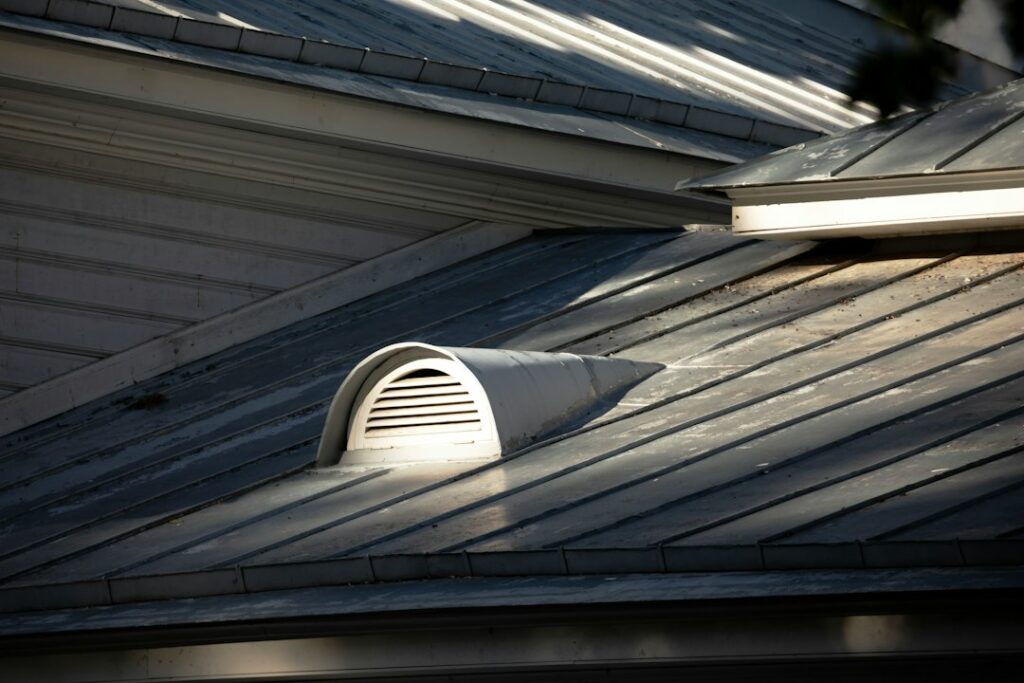
Roof ventilation is a planned pathway for air to enter and leave the roof or attic assembly. In Gasport, NY, that airflow helps manage moisture, temperature changes, winter condensation, and the long-term condition of roofing materials.
A properly ventilated roof is not simply a roof with several vents added to it. The system must work as a balanced assembly, with intake openings, exhaust openings, insulation, and air sealing all serving compatible purposes.
What does roof ventilation actually do?
Proper ventilation allows outdoor air to move through the attic or designated roof cavity. Cooler, drier air generally enters near the lower roof edges, often through soffit or eave vents. Warmer, moisture-laden air exits near the upper part of the roof through ridge, static, or other approved exhaust vents.
This movement can:
- Reduce moisture buildup beneath the roof deck
- Limit condensation on cold roof sheathing
- Help moderate attic temperatures during summer
- Reduce the chance of frost forming inside the attic
- Support the service life of sheathing, insulation, fasteners, and roofing materials
Ventilation does not replace a sound roof covering. It cannot correct a missing flashing detail, plumbing leak, failed seal, or damaged roof deck. Its role is to manage heat and moisture that naturally move through a home.
Why is ventilation especially relevant in Gasport?
Local homes experience a wide seasonal range. Cold winters can produce snow, frost, and extended periods when the roof deck remains cold. Summer conditions can bring strong solar heating to the roof surface and elevated attic temperatures.
Older housing may also have a mixture of construction methods. Some homes have open attic floors with traditional soffit and ridge ventilation, while others include additions, knee walls, finished attic rooms, enclosed roof sections, or complicated rooflines. These areas may not share the same airflow path.
Heating-related moisture is another concern. Warm indoor air from kitchens, bathrooms, laundry areas, and living spaces can rise through small openings around light fixtures, wiring, plumbing, attic hatches, and ductwork. If that air reaches a cold roof deck, condensation can form even when the roof has visible vents.
What happens when an attic is poorly ventilated?
The first effects are often hidden. Moisture may collect on the underside of roof sheathing, around nails, or near the eaves. Over time, repeated wetting and drying can contribute to staining, wood deterioration, peeling paint, musty odors, and weakened insulation.
Common signs of an attic ventilation or moisture problem include:
- Frost on the underside of roof sheathing during cold weather
- Dark staining around roof framing or fasteners
- Damp or compressed insulation
- Mold-like growth or persistent musty smells
- Peeling paint near upper walls or ceilings
- Roof sheathing that appears warped or softened
- Excessive heat in the attic during summer
- Ice buildup concentrated along roof edges
These symptoms can have several causes. A roof leak, bathroom fan discharging into the attic, poor air sealing, inadequate insulation, and blocked soffit vents can all produce similar evidence. A vent should not be blamed automatically without examining the complete attic assembly.
Does more ventilation always improve a roof?
No. More vents do not automatically create better ventilation. A roof can perform poorly when exhaust capacity is increased without providing enough intake air.
For example, adding a powered exhaust fan to an attic with limited intake openings may pull conditioned air from the house through ceiling gaps. That can increase energy loss and bring additional moisture into the attic. Strong exhaust can also disrupt the intended airflow pattern rather than improving it.
A balanced system generally needs:
- Clear intake openings near the lower roof edges
- A continuous air channel from the intake area toward the exhaust
- Adequate exhaust openings near the roof peak or upper roof area
- Baffles that keep insulation from blocking soffit-to-ridge airflow
- A reasonably airtight ceiling plane below the attic

Roof geometry matters as well. Dormers, valleys, cathedral ceilings, vaulted sections, and additions may require separate ventilation paths. A vent located on one roof section may not ventilate a disconnected section.
How do insulation and air sealing affect ventilation?
Insulation and ventilation perform different jobs. Insulation slows heat transfer, while ventilation manages air movement within the roof cavity. Neither can substitute for the other.
In a vented attic, insulation should remain on the attic floor rather than blocking the path from soffit vents to the roof peak. Baffles or rafter vents can preserve this channel where insulation is installed near the eaves.
Air sealing is equally important. Openings around plumbing pipes, electrical penetrations, recessed lights, attic stairs, ductwork, and chimneys can allow warm household air into the attic. Sealing these pathways reduces moisture movement and helps insulation perform as intended.
Bathroom and kitchen exhaust fans should discharge outdoors through properly installed ducts, not into the attic. Venting moist air into the attic can overwhelm an otherwise reasonable roof ventilation system.
Can ventilation prevent ice dams?
Proper ventilation may reduce conditions that contribute to ice dams, but it is not a complete ice-dam solution.
Ice dams often develop when heat escapes from the living space into the attic and warms portions of the roof. Snow melts above the warmer area, then refreezes near colder eaves. Adequate insulation, careful air sealing, balanced ventilation, and proper roof and attic design work together to keep roof temperatures more consistent.
Ventilation alone cannot correct major heat loss through the ceiling. It also cannot remove snow from a roof safely or repair water damage that has already occurred.
What should homeowners check safely?
Many useful observations can be made from the ground or from an accessible attic hatch. Look for blocked soffit vents, missing screens, damaged vent covers, visible daylight around roof penetrations, and insulation pushed tightly against the underside of the roof.
During cold weather, check for unusual icicles or ice buildup, but avoid climbing onto a snowy or icy roof. Inside the attic, avoid disturbing suspected mold, damaged wiring, or areas with unstable flooring.
Homeowners should also confirm that roof vents are not covered by leaves, nesting material, snow, or roofing debris. Any inspection involving steep roofs, fragile materials, electrical hazards, or suspected structural damage requires appropriate safety measures.
Are there code requirements for roof ventilation?
New York’s residential building requirements address ventilation for enclosed attics and rafter spaces. In general, ventilated roof assemblies need cross-ventilation, protection against rain and snow entry, and a clear airspace between insulation and roof sheathing.
Requirements can vary based on the roof design, insulation approach, alterations, and whether the assembly is vented or unvented. The rules in effect may also depend on when construction or remodeling occurred. For major roof work, attic conversions, or changes to insulation, code compliance should be confirmed before materials are installed.
A sound roof ventilation system is quiet, mostly hidden, and easy to overlook. Its value becomes apparent over time: a drier attic, more stable roof temperatures, better-performing insulation, and fewer moisture-related problems throughout the home.
